
7 月 28, 2026
Ana works as a shift operator at a municipal wastewater treatment plant. Every day, she walks through rows of digesters, clarifiers, and pumping stations – a world of bubbling sludge, heavy machinery, and the constant hum of blowers.
One rainy evening, she was doing her routine walk‑around near the sludge holding tanks. A faint, rotten‑egg smell hung in the air – not unusual for a treatment plant, but stronger than usual near a specific access hatch. The plant’s fixed gas detection panel on the wall read “H₂S: 0 ppm” – all clear.
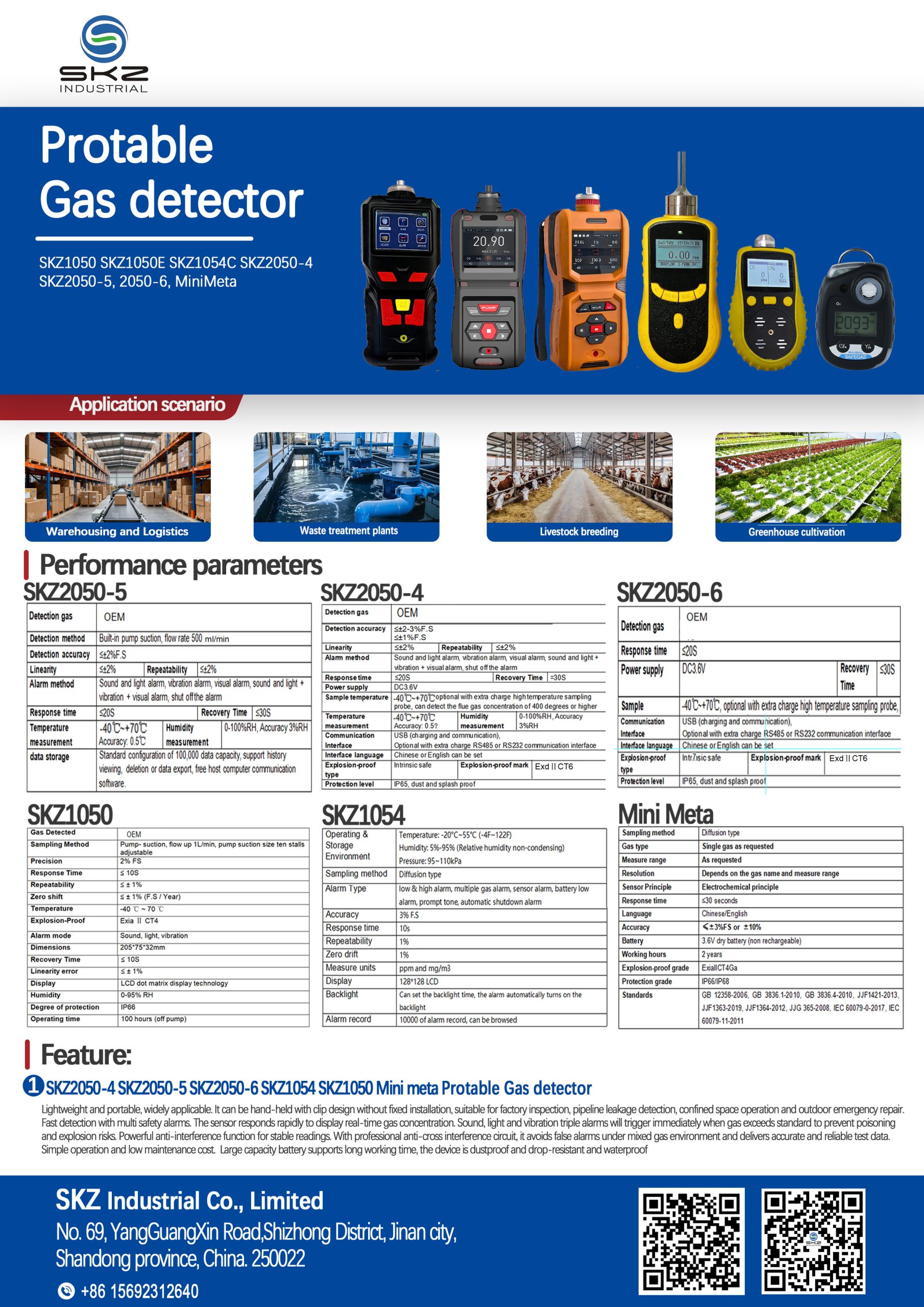
Ana, however, had learned from a mentor years ago: “Never trust a single sensor. Always bring your backup.” She pulled out her SKZ1050 gas detector – a device so compact it fits in her vest pocket, yet rugged enough to withstand the humid, corrosive environment thanks to its high‑strength engineering plastic shell.
She turned it on, and the built‑in sampling pump kicked in – high flow, instant draw. Within two seconds, the digital display jumped: 8 ppm of hydrogen sulfide. Still below the alarm threshold, but a clear sign that the fixed monitor was either fouled or failing. Ana flagged the area, called maintenance, and within an hour, they found a small leak in a sealing gasket – something that could have worsened overnight into a life‑threatening release.
That evening, Ana wrote up her shift log with a quiet sense of satisfaction. She didn’t think of the SKZ1050 as just a tool – she thought of it as the second opinion that never lies. 💙
👇 Do you work in an environment where “zero” on a screen might not tell the whole story?
Comment “ANA” and we’ll DM you a special safety bundle – because the real truth often hides where no one else looks.
 Chinese
  English
  Home
Home
 Products
 Email
Email
 WhatsApp