
9 月 15, 2026
It started as a routine grain quality check. A standard Tuesday in a massive grain storage facility, where mountains of corn sat in concrete silos, giving off that warm, dusty smell I’d come to know over fifteen years as a grain inspector. I’d walked these catwalks a thousand times. Nothing ever happened here. At least, that’s what I used to think.
My colleague, Marcus, and I had been sent to inspect a silo that had been sealed for several weeks. The facility was enormous, with grain dust floating in the air and massive ventilation fans humming in the background, generating enough airflow to stir the fine particles around my boots. I clipped my old, trusty gas monitor to my vest. It had served me well for years, but lately, it had been giving inconsistent readings. I figured it was just the dust.
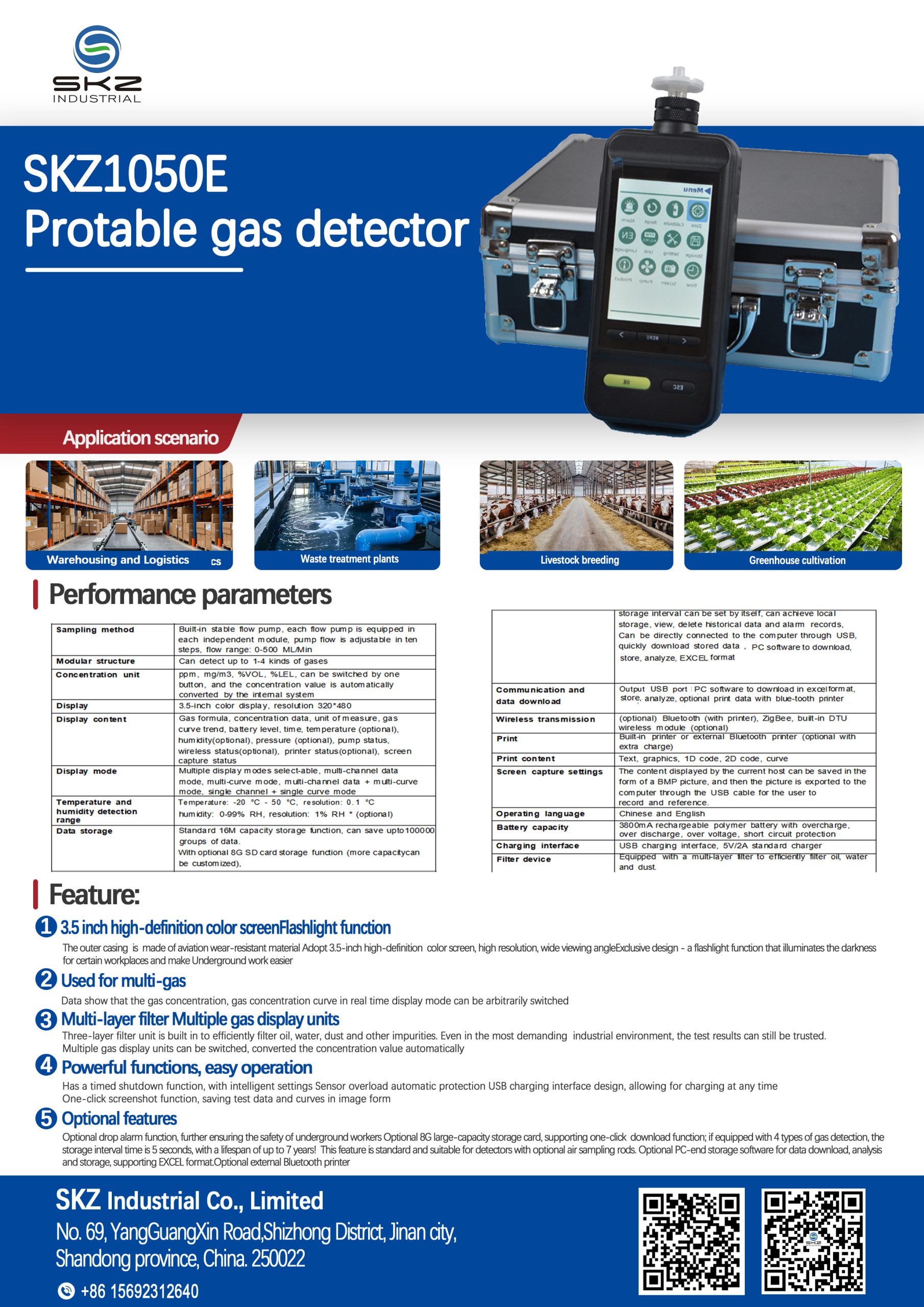
That morning, our safety manager had handed me a new unit to evaluate. “This one’s been getting good reviews,” he’d said. “Just carry it as a backup and tell me what you think.” I clipped the SKZ1050E onto my harness next to my old monitor and forgot about it.
The silo was massive, a concrete cylinder that seemed to swallow light. It was filled nearly to the top with corn, the surface a sea of golden kernels that stretched about twenty metres above the floor. We walked along the narrow catwalk that ran across the top, checking for hot spots, moisture, and any signs of spoilage.
The air in the silo was thick – not just with grain dust, but with a heavy, musty smell. The ventilation fans at the top were running at full blast, pushing air downward at what felt like a steady 6 m/s. My old gas monitor, still clipped to my vest, showed a perfectly normal reading. Oxygen at 20.9%, no detectable CO₂. Safe to proceed, according to the numbers.
But about thirty minutes into the inspection, as I crouched near the edge of the catwalk to take a sample from a deeper layer of grain, I felt a small, gentle vibration against my hip. Not a loud alarm – just a tap. A reminder. I glanced at the SKZ1050E clipped beside my old unit, and what I saw made my breath catch.
The oxygen reading on the SKZ1050E’s 3.5″ IPS screen had dropped to 19.5%. Still within the “safe” range for most standards, but the trend line was dipping. CO₂ was climbing. My old monitor showed nothing. I repositioned to take another sample, and the vibration came again, this time a little more insistent.
Then I moved too fast. My boot caught on a loose metal grating, and I stumbled forward, my arm reaching out to grab the railing. But the catwalk was wet with condensation, and my gloves slipped. I went down hard on my side, my shoulder hitting the metal grating with a sickening thud.
That’s when the SKZ1050E came alive.
Its optional fall alert screamed – a high-pitched, strobing, vibrating symphony of urgency that echoed through the concrete silo. Marcus, who was twenty metres away near the ladder, heard it clearly over the roar of the fans. He dropped his tools and ran toward me.
And as I lay there, dazed and winded, I saw the SKZ1050E’s screen flash red. The oxygen had fallen to 18.3%. The CO₂ was rising into dangerous territory. The main alarm kicked in – a loud, pulsing beep that seemed to come from everywhere at once.
I scrambled to my feet, my heart pounding. “Marcus – get back! We need air – now!” I grabbed him and pulled him toward the ladder. We climbed out of the silo faster than I’d moved in years.
Later, we found the cause. The corn at the bottom of the silo had begun to respire – a slow, natural process where grain consumes oxygen and releases CO₂. It had been happening for days, and the ventilation system, designed to blow fresh air from the top down, had created a stratification effect. The bottom of the silo was becoming depleted of oxygen while the top remained safe. My old monitor, designed for simple spot-checking, had missed the trend entirely.
The SKZ1050E’s unique sampling system – the custom AS float combined with its 10‑speed pump – had continued to draw reliable samples even in the swirling, dust-filled airflow. The intake filter, caked with fine particles, hadn’t clogged. The high-strength casing, which I later discovered was engineered to withstand drops and impacts, had protected the instrument completely during my fall.
The battery? I’d been working for over eight hours, and it still showed 60% capacity. And the IoT capability meant that the safety manager could download the entire data log from his office – a full history of the oxygen and CO₂ trends that we could analyse to prevent future incidents.
I don’t carry that old monitor anymore. I carry the SKZ1050E every single day. Fifteen years of experience, and I almost learned the hard way that you can’t always trust your gut – or a faulty piece of equipment. That little box didn’t just warn me. It saved my life.
👇 Have you ever trusted a “zero reading” and later regretted it? Or do you want your grain handling team to have the best protection available? Comment “GRAIN” and we’ll send you a special quote for the SKZ1050E – because in a silo, silence can be deadly.
 Chinese
  English
  Home
Home
 Products
 Email
Email
 WhatsApp