
7 月 24, 2026
It was Tuesday afternoon. Our R&D team had exactly 72 hours to deliver thermal stability data for a major client review – the kind that could double our annual budget.
We gathered around our old furnace, confident we’d done this test a hundred times. But that day, the readings went wild. One run gave 0.05°C jumps; the next, 0.08°C. We re‑calibrated, re‑checked, re‑ran – and each time, the curves looked like different materials. Panic started creeping in.
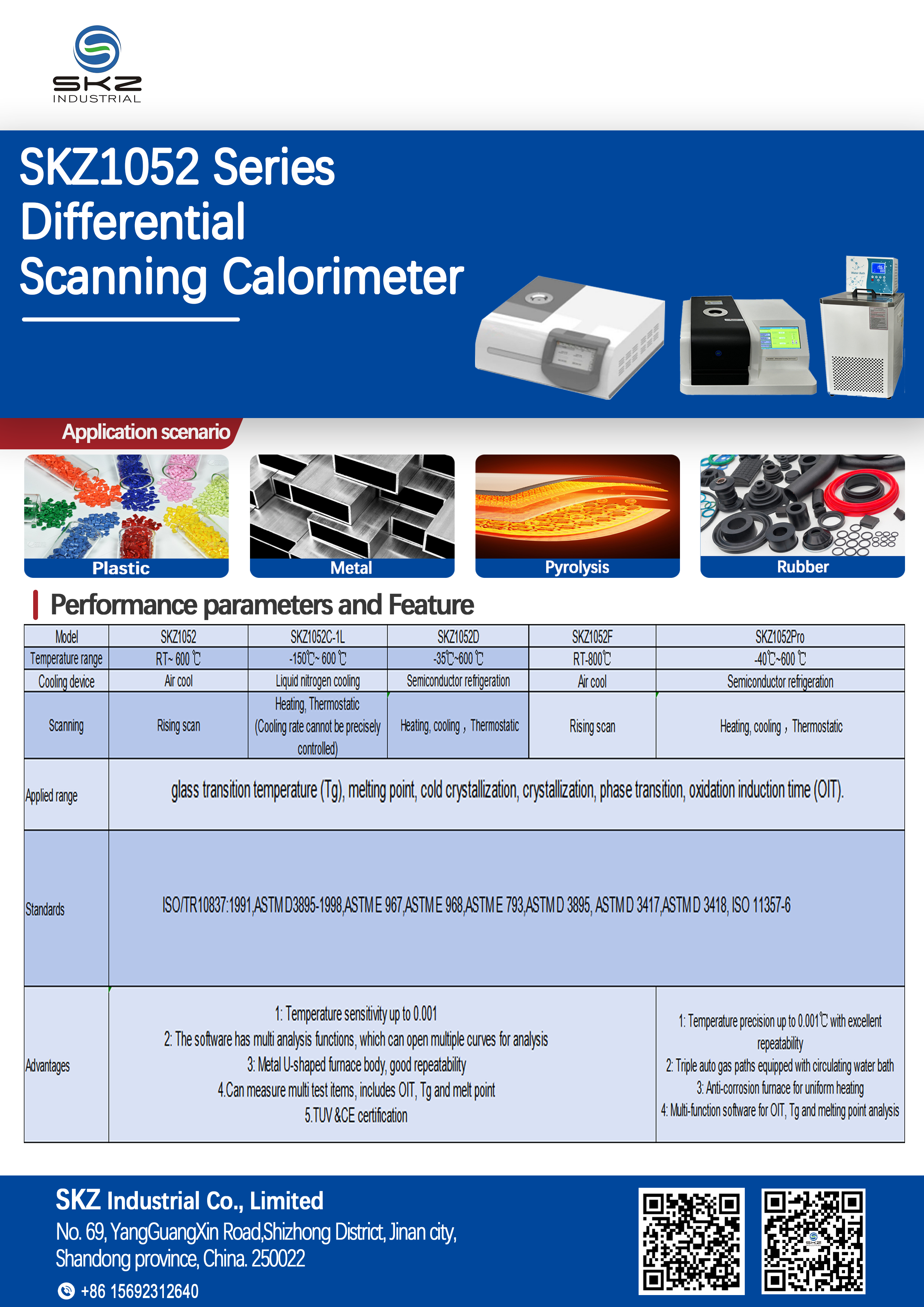
Then our lab manager rolled in a box he’d been saving “for emergencies.” Inside: the SKZ1052.
We set it up in fifteen minutes – the 7‑inch touchscreen made calibration a breeze. I dialed the range from ambient to 550°C – plenty of headroom for our high‑temp composite. The moment we hit “start,” the 0.001°C resolution revealed tiny thermal transitions we’d never seen before – like turning on a microscope for heat flow.
But the real hero was the automatic gas switching. Our old method required manually turning N₂ and O₂ valves at specific times – we always missed the window. The SKZ1052 did it smoothly, silently, perfectly every single time. We ran the test back‑to‑back – five replicates – and every graph overlapped like a carbon copy.
We delivered the report three hours early. The client loved the precision, and we closed the deal.
That machine didn’t just give us data – it gave us confidence, sleep, and a story we still laugh about. 😅
👇 Ever had a near‑disaster in the lab? Comment “SKZ” and let’s share war stories – plus I’ll send you the specs!
 Chinese
  English
  Home
Home
 Products
 Email
Email
 WhatsApp