
Sep 30, 2026
Last autumn, a mushroom farm owner called me in a panic. Two workers had nearly collapsed inside one of the grow rooms. The farm had a wall‑mounted CO₂ meter – it showed elevated but “acceptable” levels. Everyone assumed it was just the heavy, humid air.
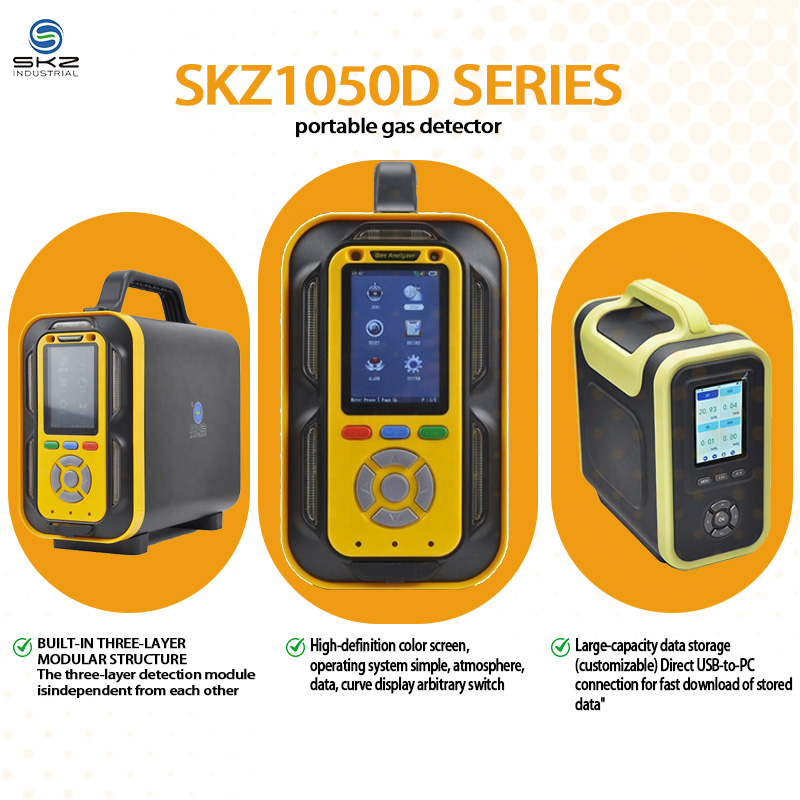
But the symptoms didn’t match. Dizziness, nausea, and a strange metallic taste in the mouth. That’s not typical CO₂ exposure alone. So I grabbed my SKZ1050D – a portable gas analyzer that fits in my tool bag – and drove out at dawn.
I fitted two modules into the device: one for carbon dioxide (CO₂) and one for carbon monoxide (CO). Here’s the crucial part – each module has its own pump and independent air inlet. The air sample for CO₂ never touches the CO sensor, so neither gas masks the other. Clean, separate readings.
I walked the grow room at 6 AM, when the fans were off and the gas heater had just kicked in. The CO₂ module read 1,800 ppm – high, but not lethal. The CO module, however, told a different story: it spiked to 45 ppm near the heater exhaust vent.
On its own, 45 ppm CO is a warning. Combined with 1,800 ppm CO₂ – which already reduces oxygen uptake – it’s enough to cause fainting. The wall meter only measured CO₂, and it sat far from the heater. It never saw the CO.
We fixed the heater leak, adjusted ventilation timing, and installed a second sensor at breathing height. No more fainting.
Since then, I’ve used the same SKZ1050D for boiler flue checks, car exhaust tests, and even office air quality audits. It detects 1 to 18 gases – you just choose the modules that match the risk.
What I value most? It doesn’t blend signals. Each gas tells its own story – and that story can save a life. 🌿
 English
  Chinese
  Home
Home
 Products
 Email
Email
 WhatsApp