
Jul 27, 2026
Anna works as an environmental technician at a municipal wastewater treatment plant. Every day, she walks past settling tanks, digesters, and miles of pipes carrying everything you don’t want to think about. The smell is part of the job – earthy, sour, sometimes sharp.
One cloudy Tuesday, Anna was doing her routine rounds near the primary pump station. A faint rotten‑egg odor drifted up from a valve access hatch. Her coworker shrugged: “It’s always a little sulfurous around here. No big deal.”
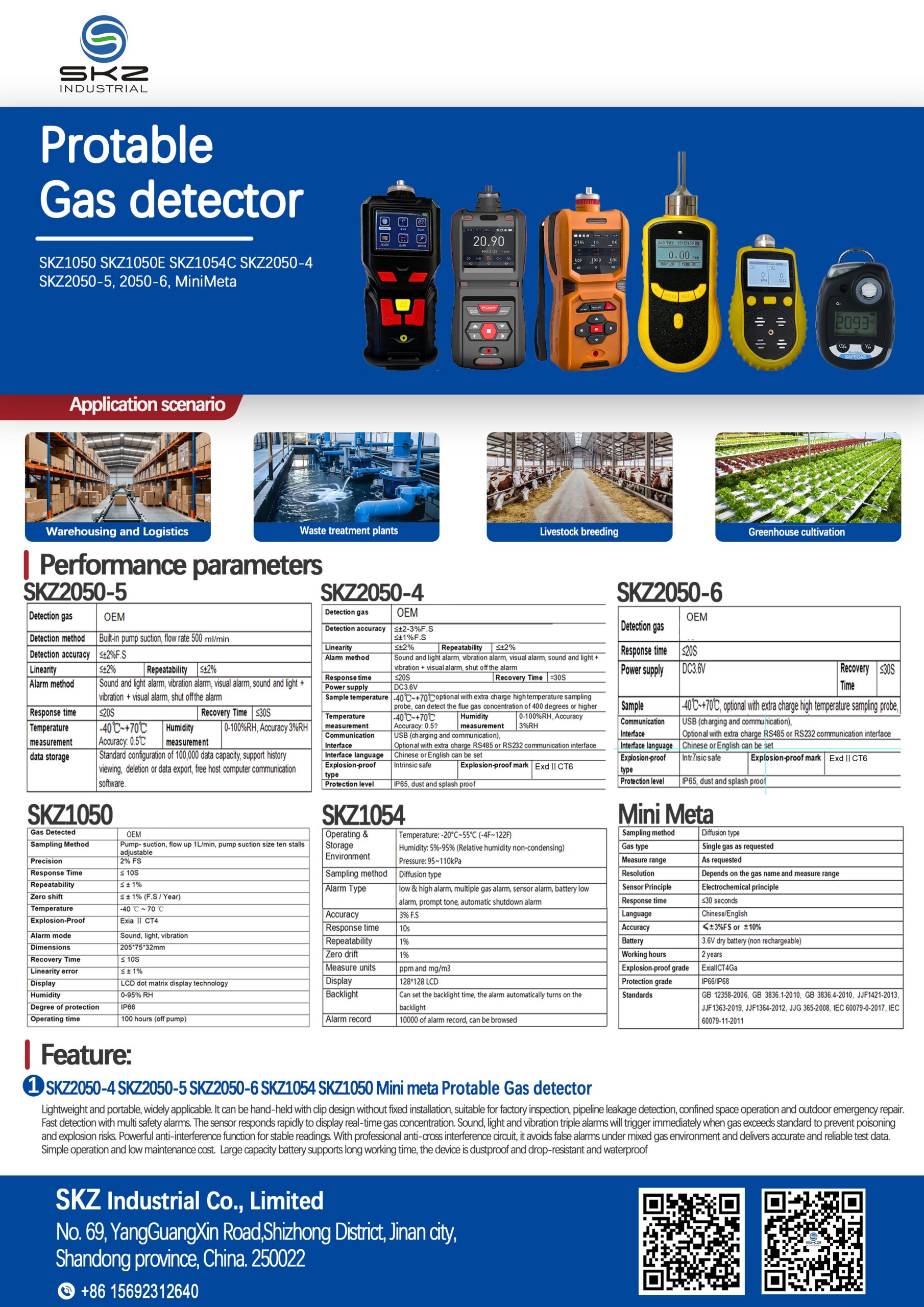
But Anna remembered her training – hydrogen sulfide can be deadly, even at low concentrations, and it knocks out your sense of smell before it knocks you out. She unclipped her SKZ1050 gas detector from her vest. The device is tiny – easily fits in a pocket – and its high‑strength plastic casing has survived humidity, chemical splashes, and more than a few drops on concrete.
She powered it on, and the built‑in sampling pump started pulling air at a high flow rate. Within two seconds, the screen lit up with a number that made her heart race: H₂S levels were creeping above the safe threshold – not enough to trigger the plant’s fixed monitors, but enough to harm anyone working nearby over time.
Anna called a halt to the maintenance work scheduled for that hatch, ordered a full ventilation check, and flagged the valve for immediate repair. Later, an engineer found a tiny crack in the sealing ring – invisible, but actively leaking.
That evening, Anna didn’t think of her SKZ1050 as “just a tool.” She thought of it as the one voice that never lies – even when everything else says “it’s fine.” 💙
👇 Ever walked into a place where your nose said “okay” but your gut said “check again”?
Comment “ANNA” and we’ll DM you a special safety bundle offer – because the most dangerous gases are the ones you stop smelling.
 English
  Chinese
  Home
Home
 Products
 Email
Email
 WhatsApp